BingoBuddy: Event Booking App
Entertainment
Booking Platform


CLIENT
Bingo Buddy
CATEGORY
Entertainment
TIMEFRAME
6 Weeks
SERVICE
Product Strategy
Development
About Project

- 340 venues listed nationwide within the first year.
- 47,000 tickets sold through the platform.
- 26% attendance lift on sessions listed, measured against the same venue's prior year.
- 62% of bookings came from players who had never attended that venue before.
- Session discovery in about 20 seconds, replacing word of mouth and a laminated sheet at the door.
- Built in 6 weeks.
Challenge & Solution

Challenge
Bingo players relied on local advertisements and fragmented event listings, limiting discovery of upcoming events and reducing attendance opportunities for organizers.

Solution
We developed a nationwide event booking platform that centralizes event discovery and ticket purchasing, improving player accessibility while helping venues increase attendance and streamline reservation workflows.
The founder's mother played bingo three nights a week and found out about sessions from a printed sheet pinned up inside the hall she already attended. If she wanted a game somewhere new, there was no way to find one short of driving there and asking.
Halls advertised in local newspapers and on Facebook pages with a few hundred followers. The result was a category running two problems at once: operators complaining that their crowd was ageing, and a younger audience who could not have found a game if they had wanted to, because nothing was discoverable online.
Existing event platforms were no help. They are built around one-off events with a marketing budget, not a recurring Tuesday session at a venue that has run for thirty years and has no website.
The 26% attendance lift is what turned this from a consumer app into a business, because it gave operators a reason to list and to keep sessions updated. Venues that had never had a web presence now have one they maintain themselves.
The demographic shift was the surprise. A meaningful share of new bookings come from players in their twenties and thirties, discovering a category that was effectively invisible to them. Social clubs and quiz nights have been added as session types.
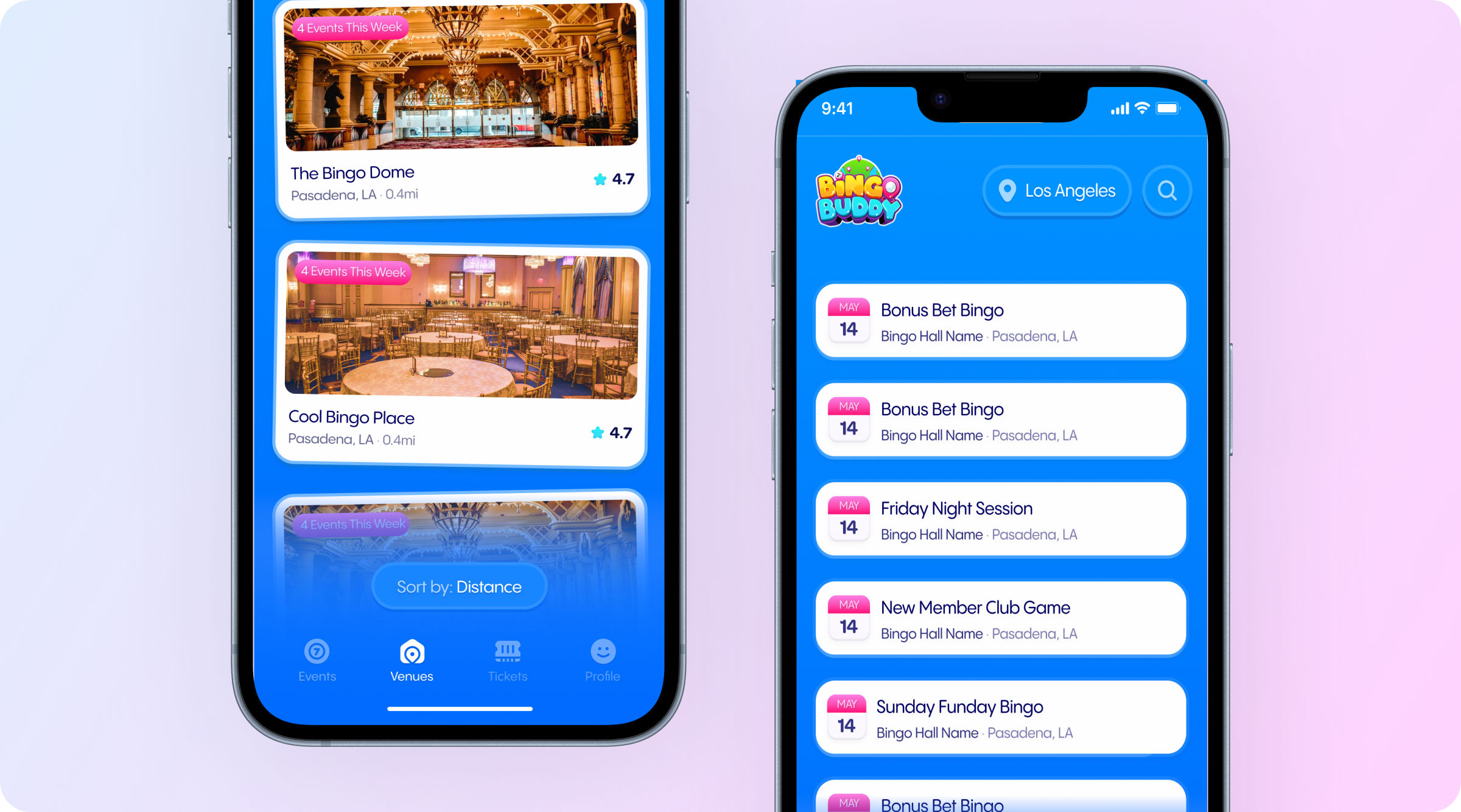
Search by location and date across every listed venue, which is the thing that did not exist before and is most of the value.
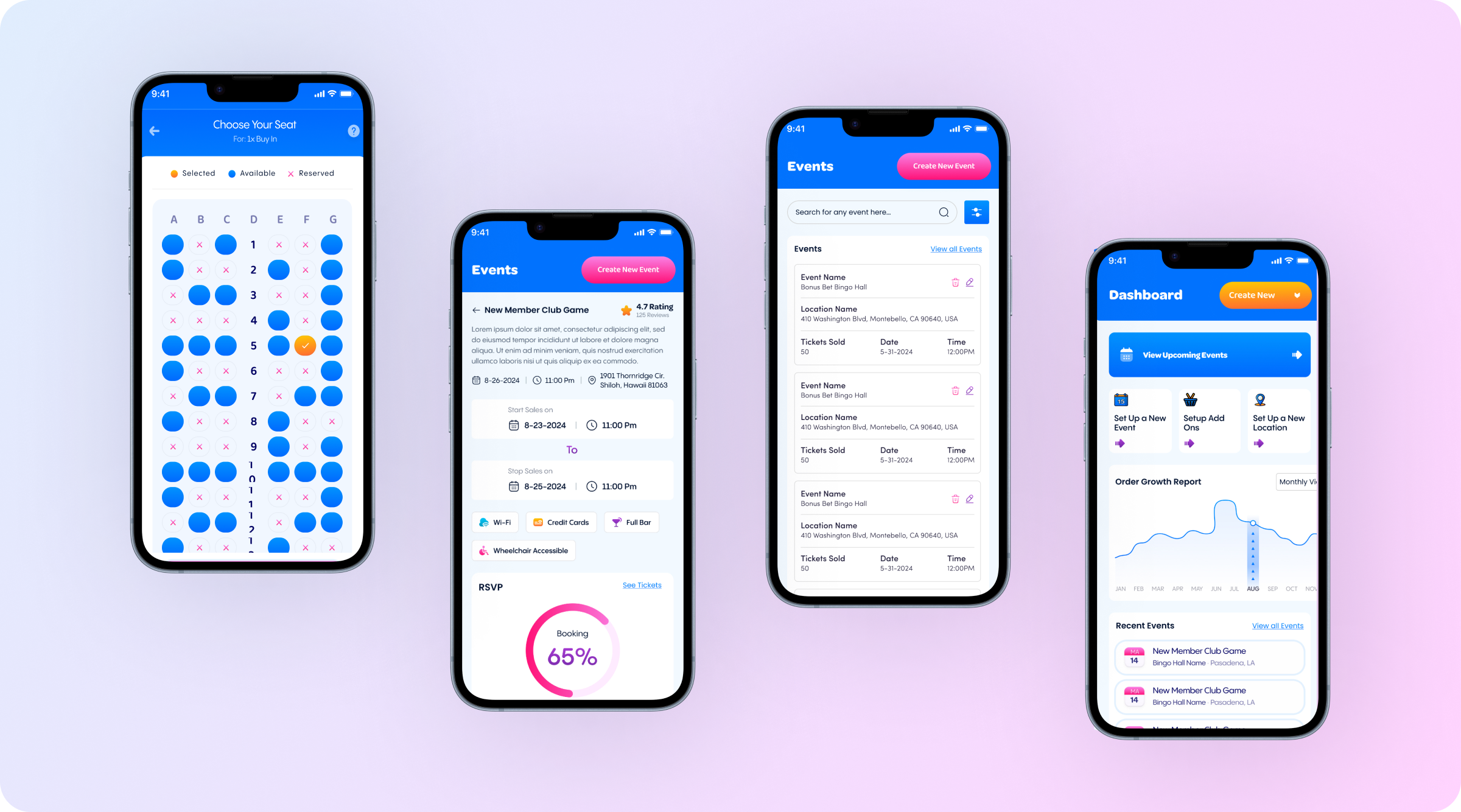
Session listings carry what a player actually needs to decide: admission price, book prices, prize structure, start time and session type. Venue profiles add parking, accessibility, whether food is served, and whether the hall is cash only.
Ticketing runs with QR entry, and venues that prefer pay-at-door can list without selling tickets, which is what got the long tail of operators onboard.
Players can follow a venue and get alerts when new sessions are scheduled. Group booking handles coach parties in one transaction. Each venue page carries a short first-timer guide, because the largest barrier for a new player is not knowing how a session works.
An operator portal handles scheduling, capacity and pricing without needing a website.
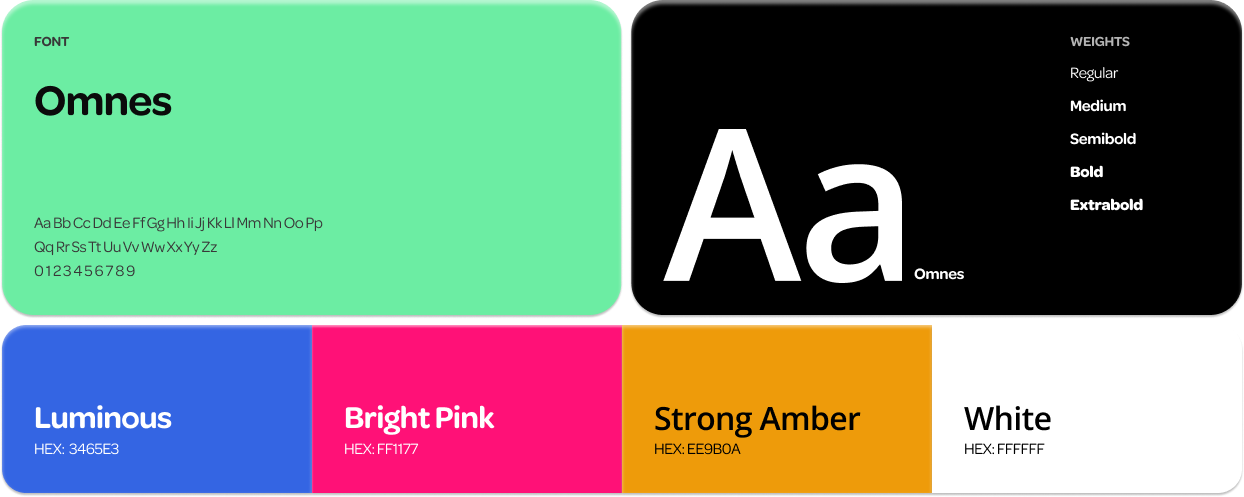
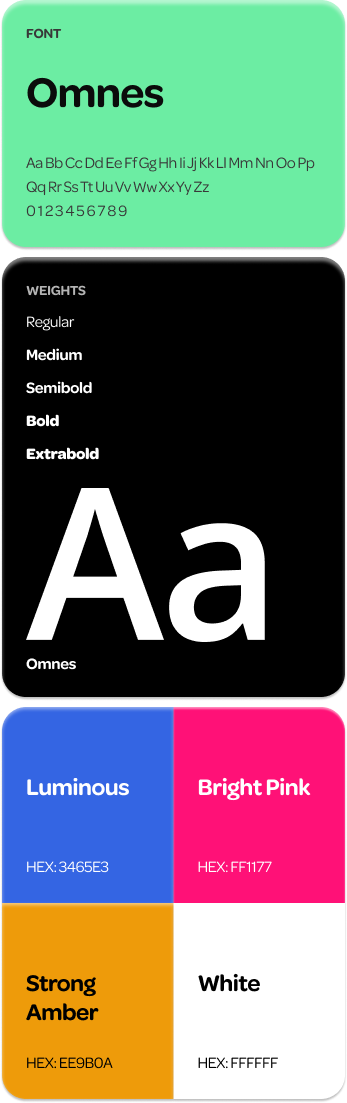
Typography & Color