Campaign Sync: Marketing Platform
Marketing
Workflow Automation


CLIENT
Campaign Sync
CATEGORY
Marketing
TIMEFRAME
7 Weeks
SERVICE
Product Strategy
Development
About Project

- Campaign setup down from 3 days to 4 hours across email and five social channels.
- Posting consistency from 41% to 94% of planned content published on schedule.
- Reporting assembly from 9 hours a week to 20 minutes.
- 340 campaigns executed through the platform in year one.
- A team of four now runs what previously needed seven.
- Built in 7 weeks.
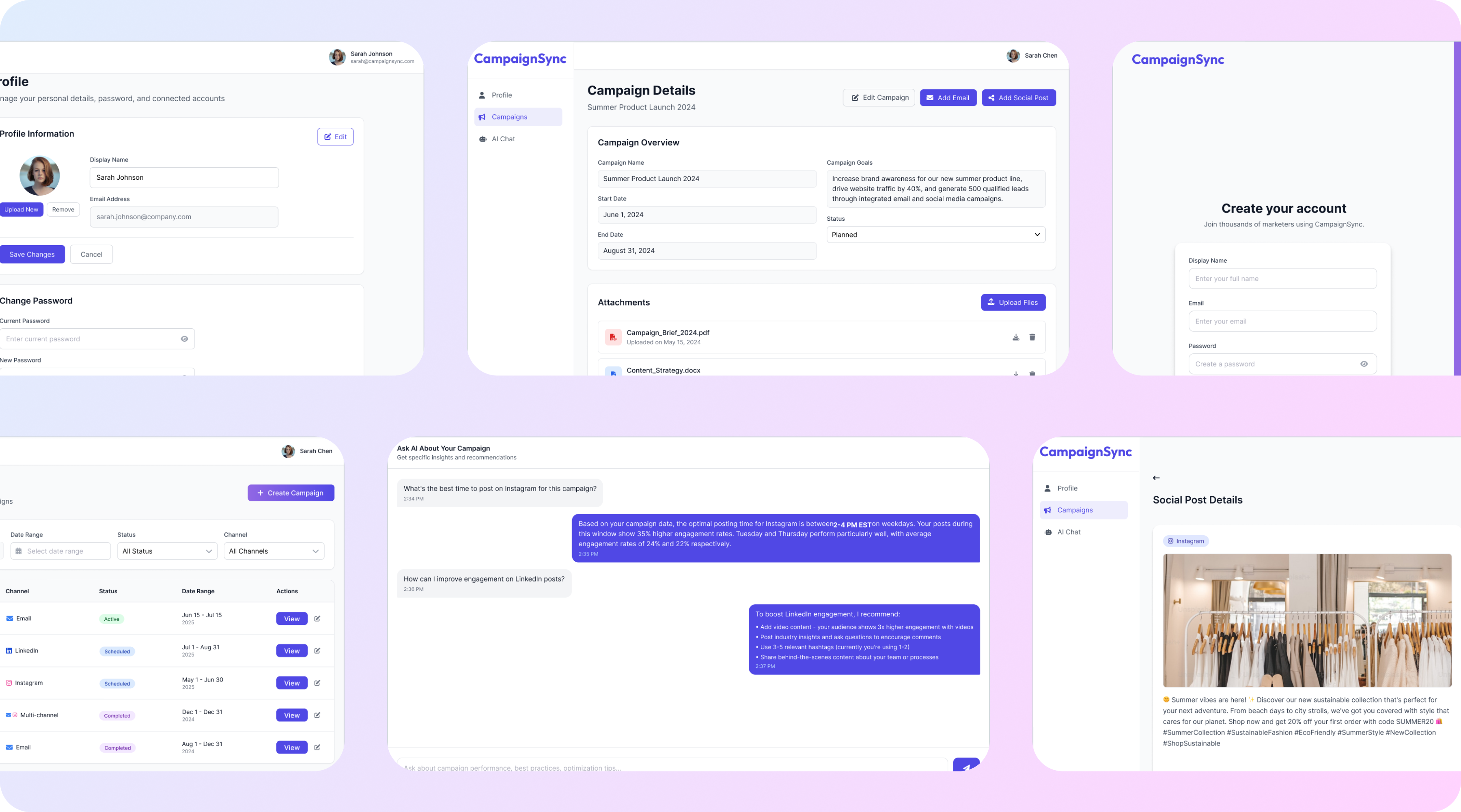
Challenge & Solution

Challenge
Marketing teams managed outreach campaigns across disconnected tools, leading to inconsistent messaging, inefficient workflows, and difficulty tracking campaign performance across channels.

Solution
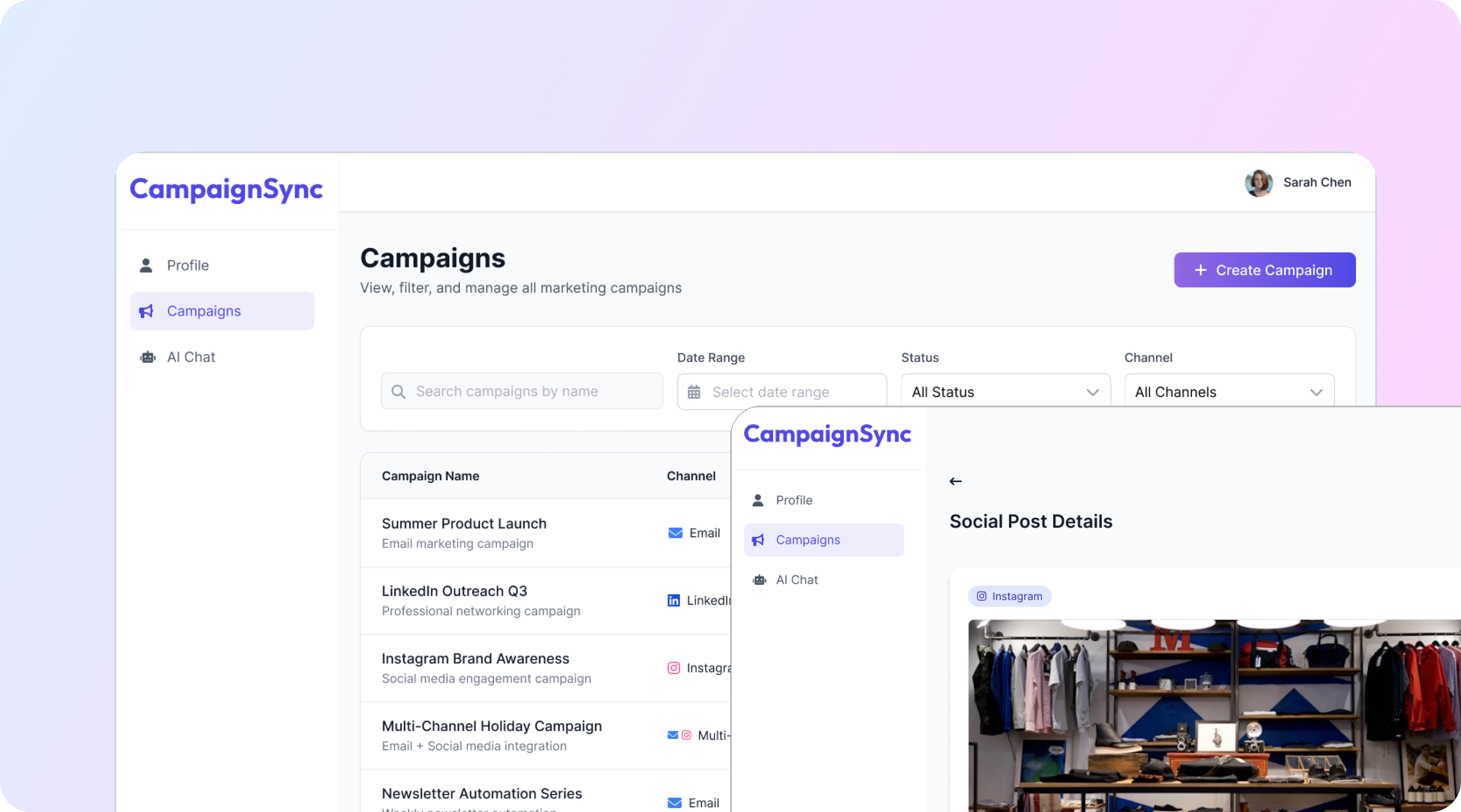
We built a centralized campaign automation platform that unifies outreach planning, messaging coordination, and performance tracking, enabling marketing teams to execute campaigns more efficiently while maintaining consistent brand communication.
The marketing team ran email through one tool, social scheduling through another, paid through the native ad managers, and tracked all of it in a shared spreadsheet that was accurate for about two days after each update.
The visible symptom was inconsistency. A campaign would launch on email with one message and appear on LinkedIn a week later with different copy, because the person scheduling social was working from an older brief. Fewer than half of planned posts actually went out on the day they were meant to.
The invisible symptom was worse. Nobody could say which channel had produced which result, because attribution lived in four dashboards with four different naming conventions. They had trialled two reporting products, both of which read data well and neither of which touched the creation side, so the manual work moved rather than disappeared.
Consistency was the fix that mattered most and the one nobody had budgeted for. Moving from 41% to 94% of planned posts actually going out meant the campaign calendar stopped being aspirational, which changed how the team planned rather than just how they executed.
Four people now do what seven were doing, and the time freed went into testing rather than headcount reduction. The reporting view is now what gets presented to the board each quarter.
A single campaign definition that publishes to email and to the social channels from one brief, so the message cannot drift between channels or between the people scheduling them.
UTM templates are enforced at creation rather than left to convention, which is what makes the reporting side possible at all.
A shared asset library holds creative with version control, so what is live traces back to an approved version. An approval workflow sits between draft and publish, replacing the email thread that used to serve that purpose.
The content calendar shows every channel in one view with conflict warnings when two campaigns target the same segment in the same week. Budget and pacing alerts fire on deviation rather than at month end, and consolidated reporting pulls spend, opens, clicks and conversions into a single attribution view.
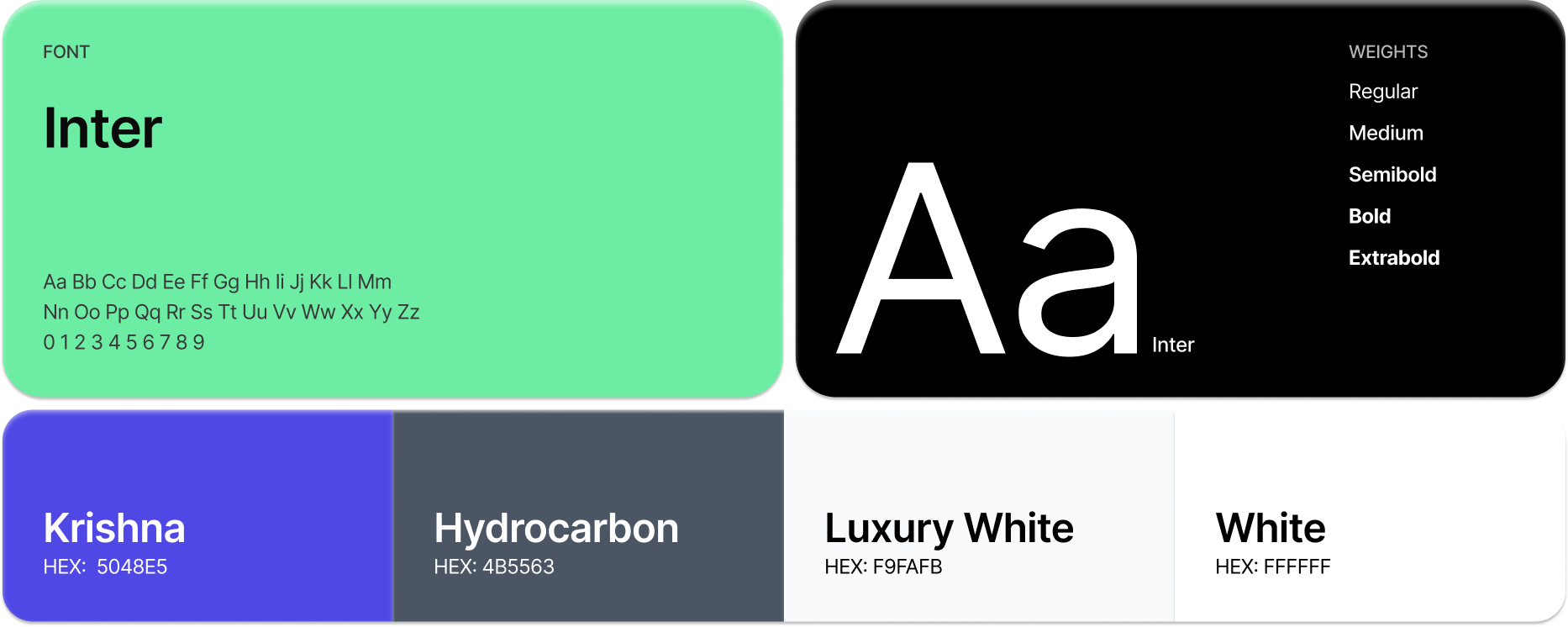
Typography & Color