CommonFaktor: South Asian Dating
Consumer Social
Mobile App


CLIENT
Common Faktor
CATEGORY
Consumer Social
TIMEFRAME
7 Weeks
SERVICE
UX/UI
Development
Product Strategy
About Project

- 140,000 registered users across the US, UK and Canada in the first eighteen months.
- 3.4x higher first-message reply rate than the mainstream apps the founders benchmarked against.
- 1,900 relationships reported through the in-app success form.
- 62% of matches come from compatibility factors the general-purpose apps do not collect.
- 41% of users arrived through referral from an existing member.
- Built in 7 weeks.
Challenge & Solution

Challenge
South Asian singles struggled to find dating platforms that reflected cultural compatibility priorities and shared relationship values.

Solution
We built a culturally focused dating platform that matches users based on shared values and traditions, creating a safer and more meaningful relationship discovery experience.
Both founders had spent years on mainstream dating apps having the same conversation in the first ten messages, every time. Which region, which language at home, how observant, what the family expects, whether either person is planning to move. None of it appeared on a profile, all of it was decisive, and asking it early reads as an interrogation.
The apps that did target the community were mostly a decade old, felt built for arranged introductions rather than dating, and put parents in the flow in a way that a thirty-year-old professional in Toronto did not want.
The insight they brought us was not that South Asian singles need their own app. It was that the compatibility questions which matter most in this context are the ones a general-purpose app has decided are too sensitive to ask, and that asking them properly, once, at signup, removes the friction rather than adding it.
The reply rate is the metric the founders lead with, because it is downstream of everything else. When both people already know the answers to the first ten questions, the conversation starts somewhere more interesting.
Growth has been overwhelmingly referral-driven, which is unusual in a category that normally buys its users. The contacts privacy mode turned out to be the most-cited reason people felt able to join at all.
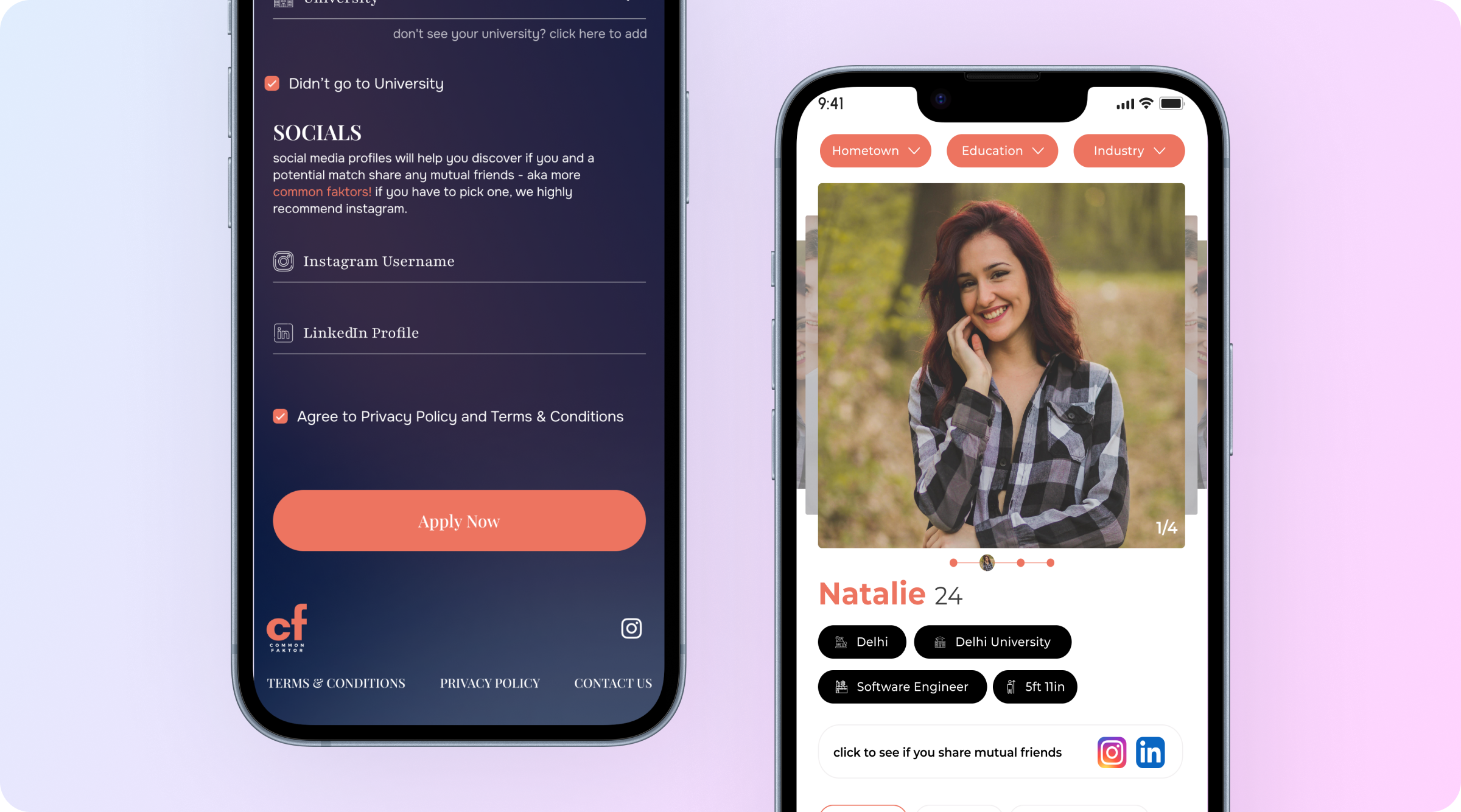
A structured compatibility profile covering region and language, religious observance on a spectrum rather than a binary, dietary practice, family involvement expectations, and relocation openness. Each field is optional and each is visible to the user as a matching weight they control.
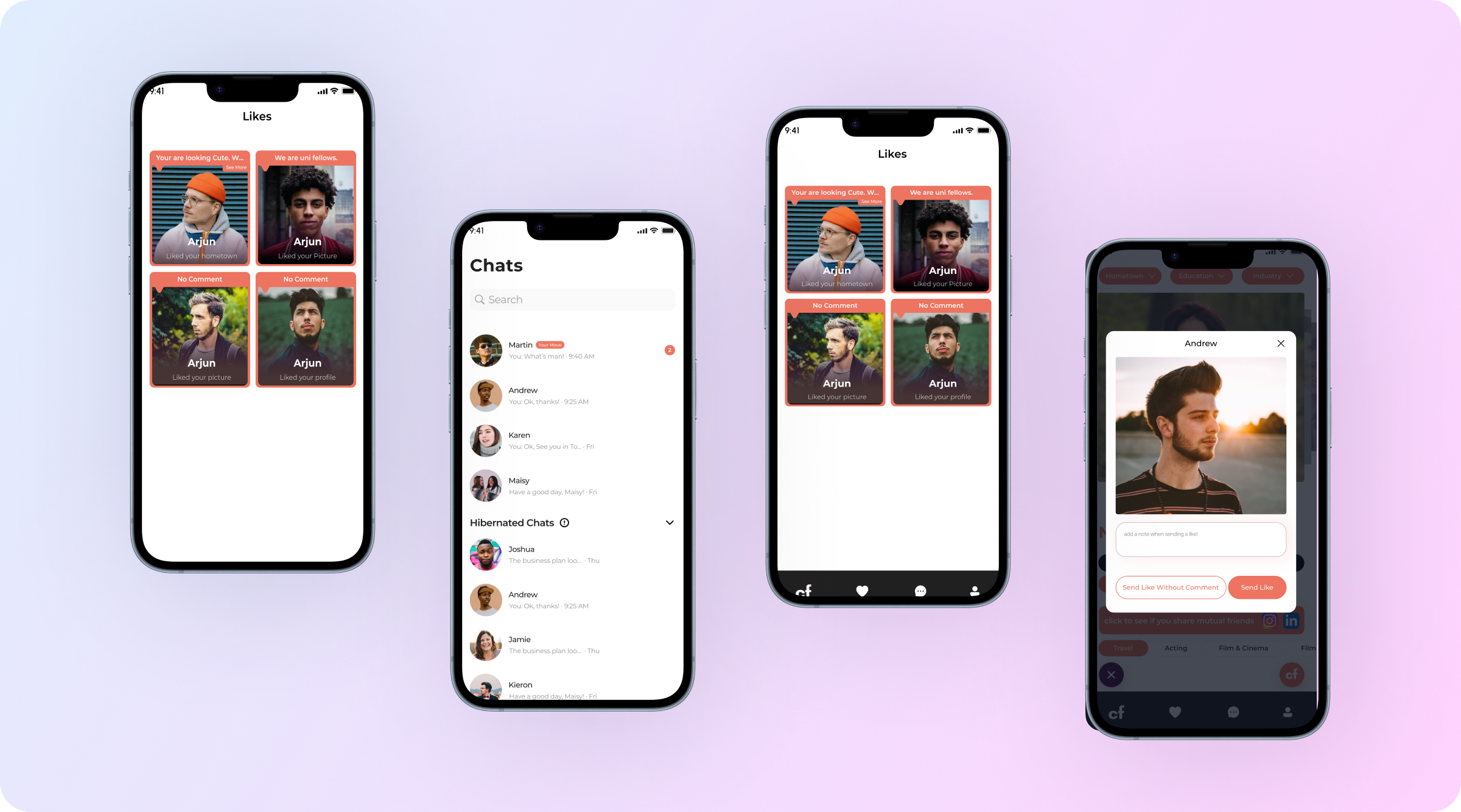
Matching runs on those weights rather than on proximity and photo engagement alone, and the match screen states why two people surfaced, which is what lifts reply rates.
Verification is photo and phone based, with a community reporting flow tuned for the specific harassment patterns the founders knew the category attracts.
Beyond matching, there are prompts written for this audience rather than adapted from a generic set, a privacy mode that hides a profile from anyone in the user's phone contacts, and an intentions field that separates casual from marriage-minded without making either the default.
Typography & Color