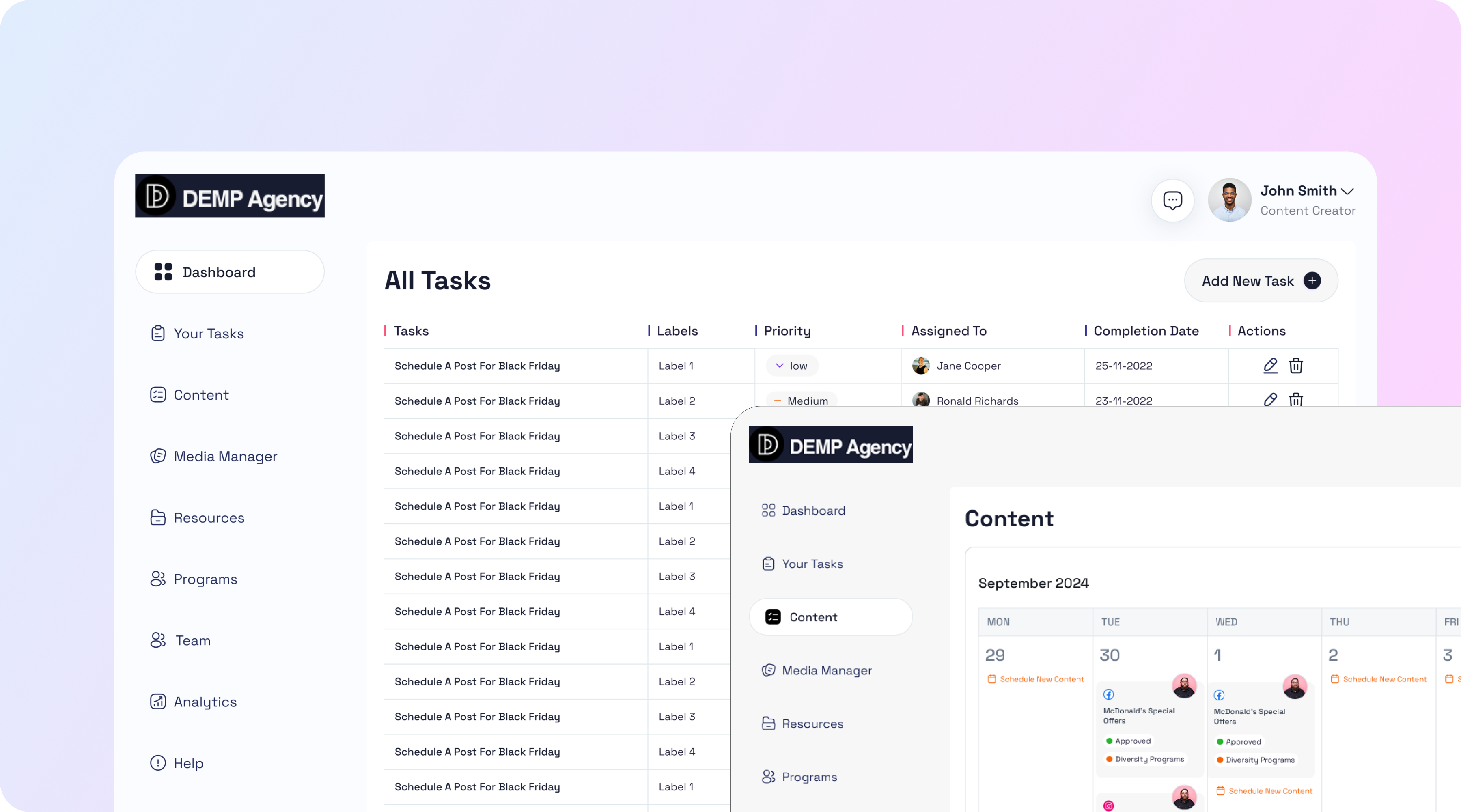
DEMP: Content Strategy App
Marketing
Workflow Automation


CLIENT
DEMP Agency
CATEGORY
Marketing
TIMEFRAME
6 Weeks
SERVICE
Product Strategy
Development
About Project

- Content brief to approved draft in 2 days, down from eleven.
- Message consistency scoring 94% across campaigns, against 58% at baseline.
- 28 client brands managed in the system.
- Revision rounds down from 4.2 to 1.6 per deliverable.
- Onboarding a new writer takes 3 days rather than six weeks of absorbing house style by osmosis.
- Built in 6 weeks.
Challenge & Solution

Challenge
Agencies struggled to maintain consistent brand messaging across campaigns, often producing disconnected marketing content that weakened long term storytelling strategies and audience engagement.

Solution
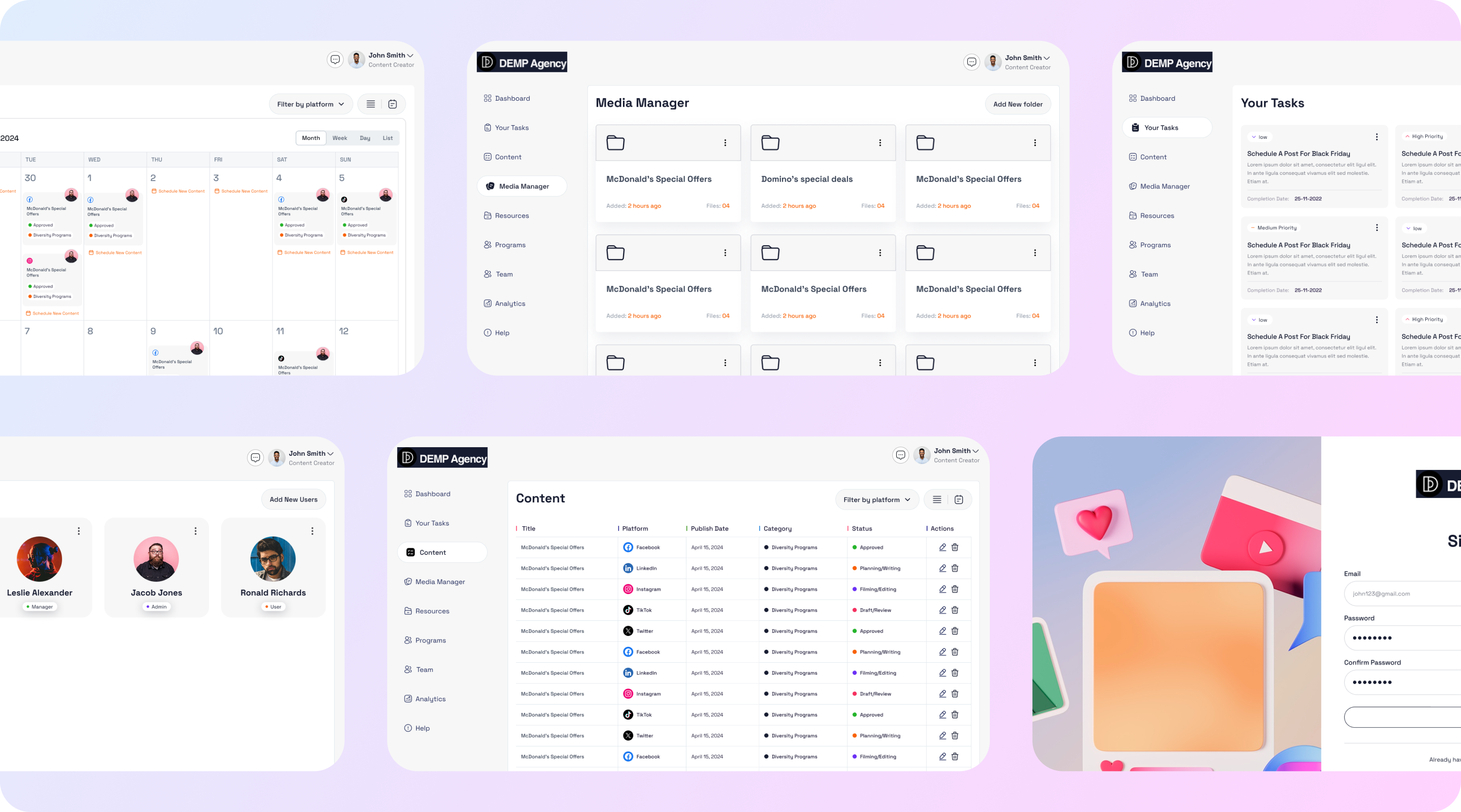
We created a structured content planning platform built around pillar based campaign strategies. This allows agencies to maintain messaging consistency, streamline content workflows, and scale marketing production across multiple client brands.
The agency's problem was not talent. It was that every writer held a slightly different mental model of each client's voice, and nothing anywhere recorded which model was correct.
Strategy lived in a deck presented once at the start of an engagement and never opened again. Six months later a campaign would go out that was perfectly well written and said something the client had explicitly moved away from in the second month, because the person who wrote it was not in the room when that was decided.
The visible cost was revision cycles: four rounds on a deliverable that should have taken one, most of it spent rediscovering a position the agency had already agreed. The invisible cost was that new writers took a month and a half to become useful, because the only way to learn a client's voice was to get it wrong repeatedly in front of a senior.
Revision rounds falling from four to under two is the number that pays for the system, and it came from writers starting correct rather than from reviewers becoming more lenient.
The onboarding result mattered more to the agency's growth plan. Being able to make a new writer productive in three days changed what their hiring looked like, and removed the bottleneck that had kept them from taking on larger retainers.
A living brand system per client holding positioning, messaging pillars, proof points, approved and forbidden terminology, and tone guidance with worked examples of each, versioned so a change is dated and attributable.
The content brief pulls from that system automatically, so a writer starts with the current position rather than a remembered one. Drafts are scored against the brand system for terminology, tone and pillar coverage before they reach a human reviewer.
Campaign narratives link individual pieces to the arc they belong to, which is what stops a series of individually good posts adding up to nothing.
Approval runs in structured rounds with comments attached to the brand rule they invoke rather than to personal preference. A content archive is searchable across clients by pillar and format, so nothing gets written twice.
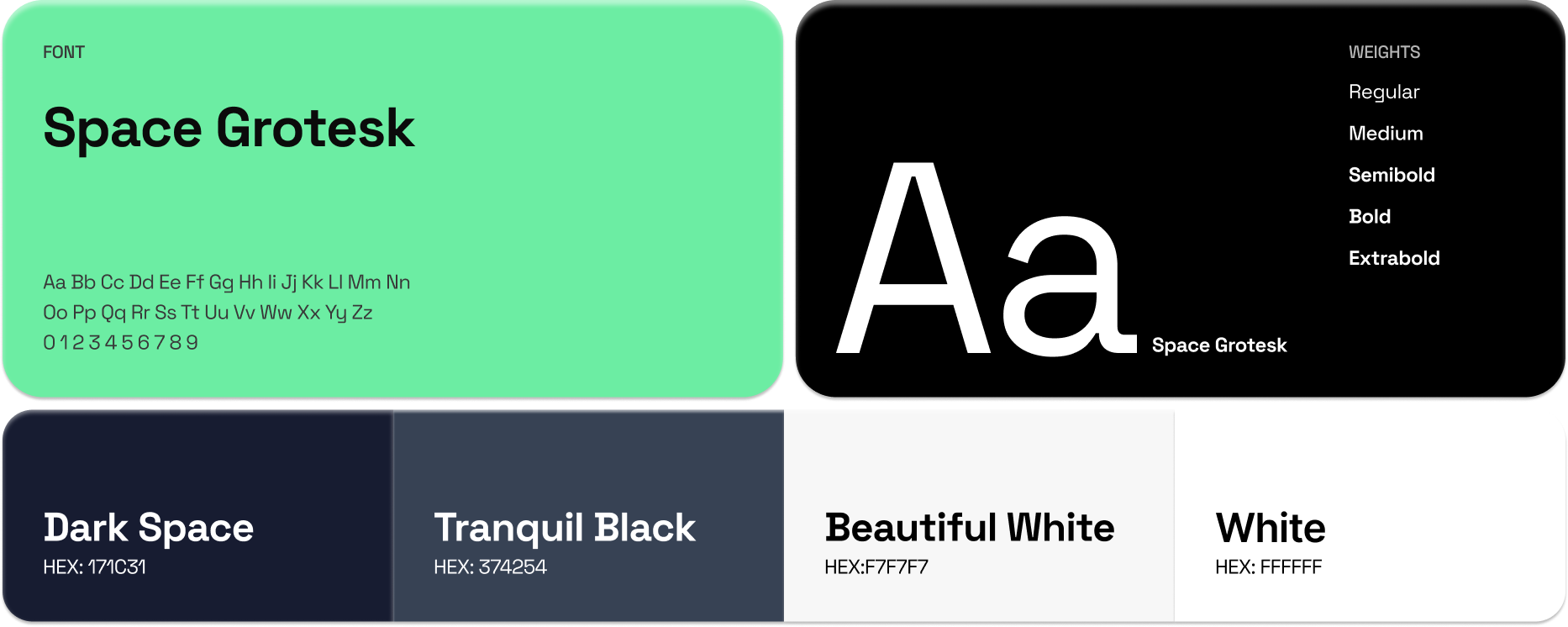
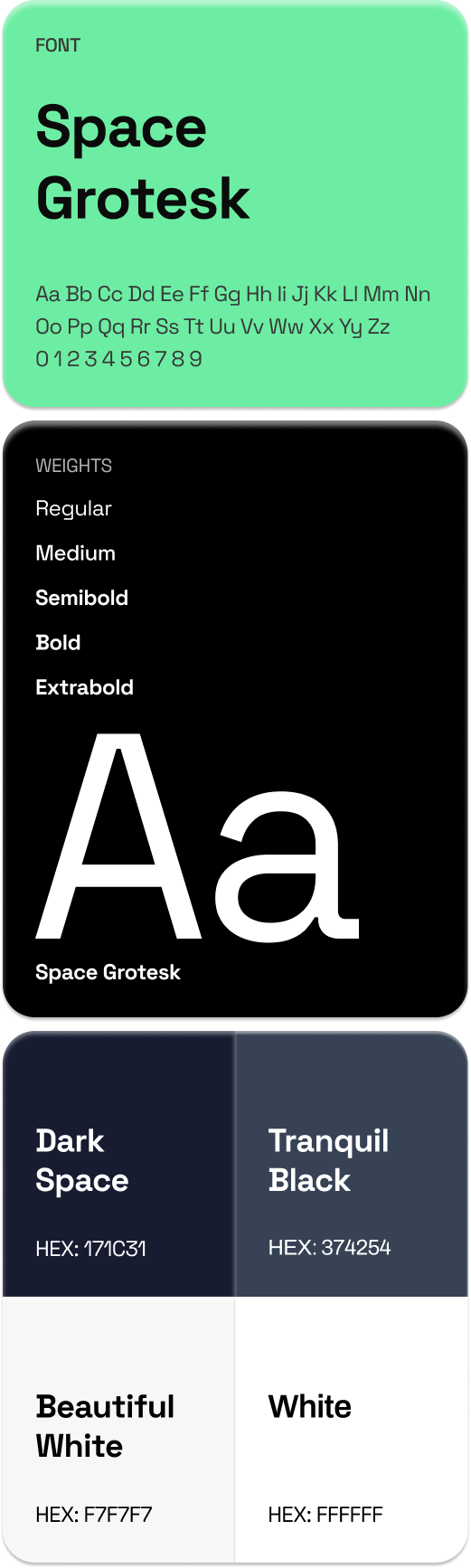
Typography & Color