Farmers Market Haul
Ecommerce
Marketplace


CLIENT
Farmers Market Haul
CATEGORY
Ecommerce
TIMEFRAME
6 Weeks
SERVICE
Product Strategy
Development
About Project

- 410 markets and 6,200 vendors listed in the first eighteen months.
- Vendor sales up 22% on average for those keeping a live stock list.
- Market footfall up 31% at venues with a complete profile.
- 94,000 shoppers using the app to plan a market trip.
- Vendors post their week's stock in under 2 minutes from a phone at the stall.
- Built in 6 weeks.
Challenge & Solution

Challenge
Local farmers markets lacked digital visibility, making it difficult for consumers to discover markets and vendor offerings, which limited vendor sales opportunities and consumer access to local produce.

Solution
We built a discovery and ordering platform that connects consumers directly with local farmers, improving market visibility, increasing vendor revenue opportunities, and simplifying local produce purchasing workflows.
Farmers markets are almost entirely invisible online. Most have no website. The ones that do usually list an address and a set of opening times that were accurate in 2019. Nobody publishes who is trading this week, and nobody publishes what they have.
The client had run a market stall for years and watched the consequence from both sides. Shoppers drove out expecting strawberries in April. Vendors brought produce that did not sell because the people who wanted it did not know it was there. Both groups concluded the market was unreliable, which became self-fulfilling.
The hard constraint was who does the data entry. A vendor standing behind a table at seven in the morning is not going to fill in a product catalogue. Anything requiring more than a couple of minutes on a phone would simply not get used, and an out-of-date listing is worse than none.
The 22% vendor sales lift tracks almost exactly with posting frequency, which gave operators a concrete argument for getting stalls onto the platform rather than a general appeal to modernise.
Several markets now use the vendor dashboard for stall allocation and waiting lists, which was not built for them and is now the feature operators ask about first.
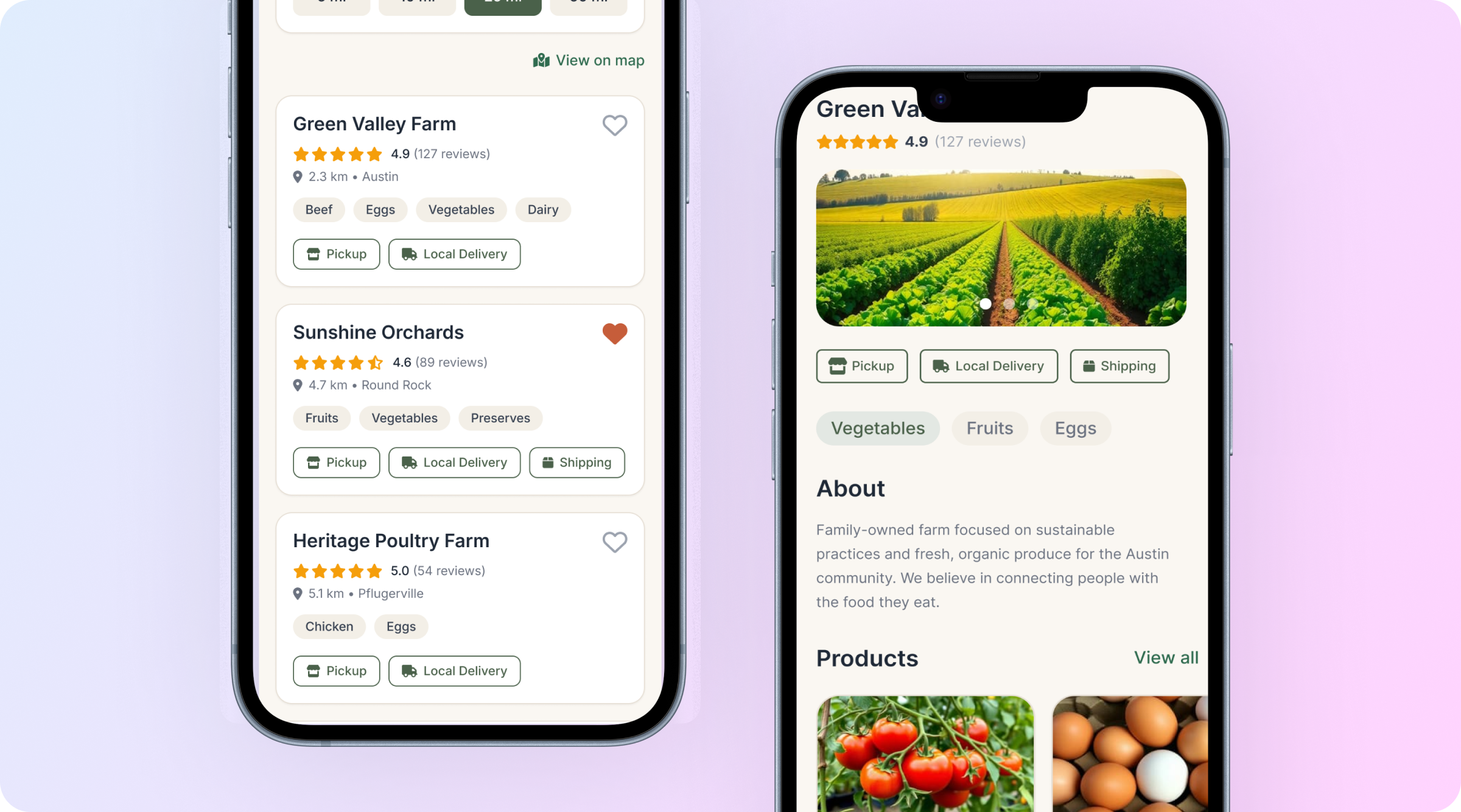
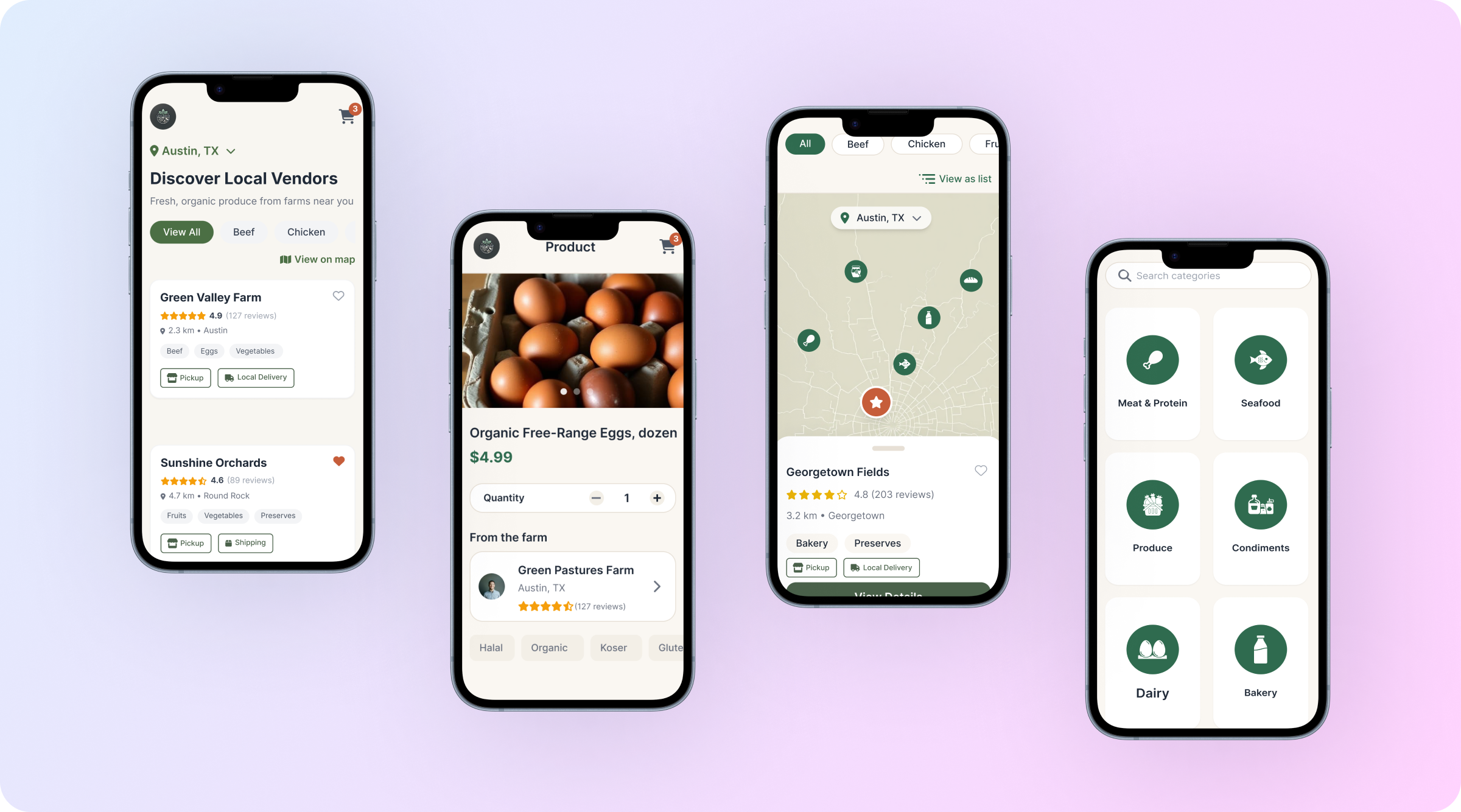
Market profiles carrying trading days, seasonal schedule, parking, payment methods and whether dogs are welcome, maintained by the market operator.
Vendor stock updates are the core, and they are deliberately crude: a vendor photographs the stall or taps a few items from their saved list, and it publishes. Two minutes, standing up, one hand.
Shoppers search by produce rather than by market, so someone looking for a specific thing finds who has it this weekend. Follows on a vendor or a market trigger alerts when new stock posts.
Seasonal availability guides explain what is genuinely in season locally, which addresses the strawberries-in-April problem at source. Pre-order and collection is available for vendors who want it, and a market operator dashboard shows which stalls are posting and which are not.
Typography & Color