Lifeline: EMS Event Manager
Healthcare
Workflow Automation


CLIENT
Life Line Ambulances
CATEGORY
Healthcare
TIMEFRAME
8 Weeks
SERVICE
Product Strategy
Development
About Project

- Staffing conflicts down 89%, from routine to rare.
- Invoicing cycle from 24 days to 6 after an event.
- Billing disputes down 76%, with hours captured on site rather than reconstructed.
- 420 events staffed through the system in year one.
- Scheduling admin from 14 hours a week to under 3.
- Built in 8 weeks.
Challenge & Solution

Challenge
Event service scheduling and billing required coordination across multiple departments using disconnected tools, leading to staffing conflicts and financial tracking errors.

Solution
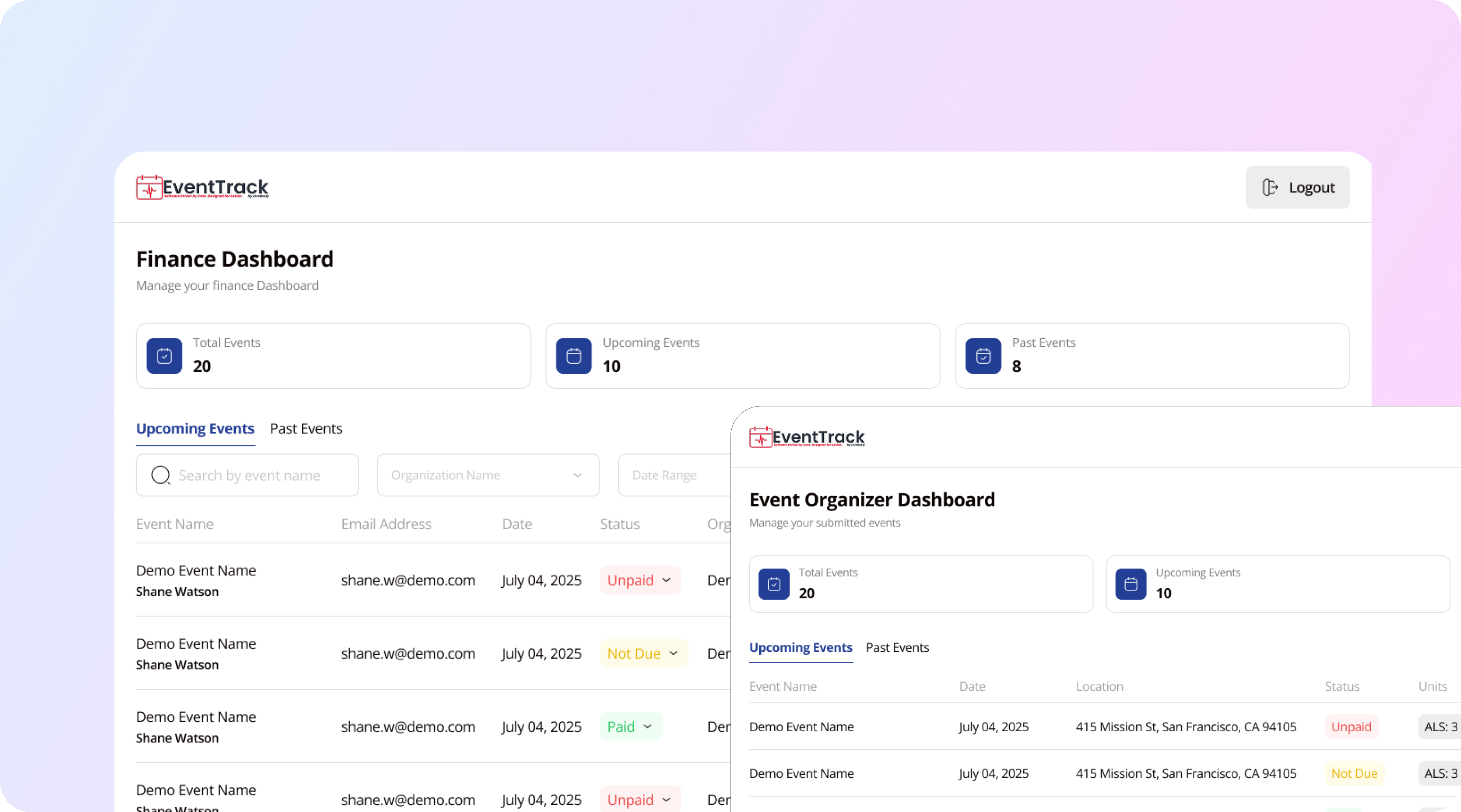
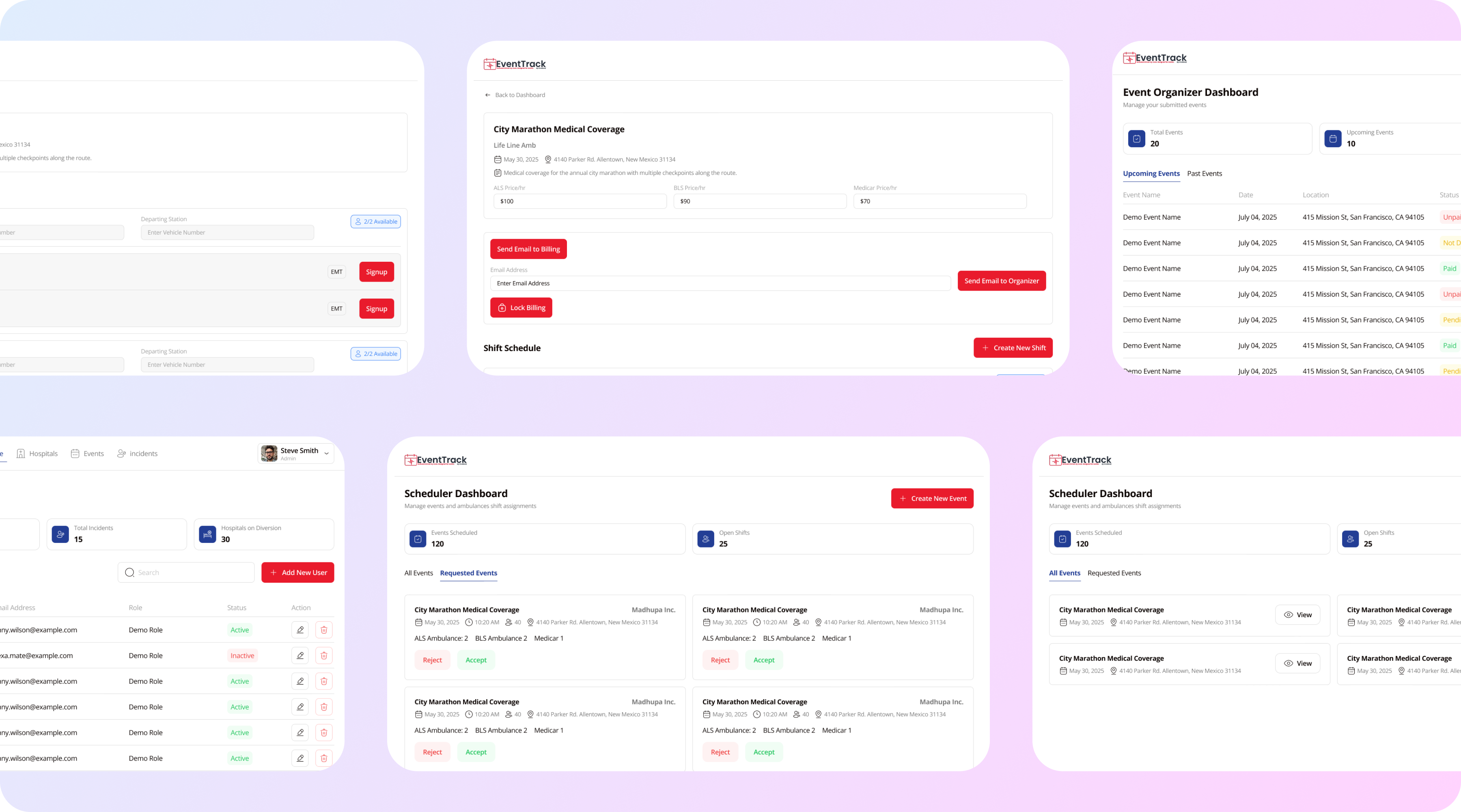
We built an event operations platform that centralizes scheduling, resource allocation, invoicing, and shift management, improving coordination efficiency across operational, staffing, and finance teams.
The client staffs medical crews at events, and the business ran across three departments that did not share a system. Operations built the schedule in a spreadsheet. HR held certifications and availability somewhere else. Finance invoiced from a paper timesheet that arrived days after the event, if it arrived.
The visible failure was double-booking. A paramedic scheduled for two events on the same Saturday, discovered on the Friday, fixed by a scramble of phone calls. It happened often enough that operations had built a habit of over-staffing to absorb it, which quietly ate the margin on every contract.
The invoicing side was worse and less visible. Hours were reconstructed from memory and handwritten notes, so bills went out late, clients queried them, and the queries could rarely be answered with evidence. Cash sat uncollected for weeks because nobody could prove who had worked when.
Cutting the invoicing cycle from 24 days to 6 changed the cash position of the business, which was the outcome the finance director had asked for and the operations team had not realised was connected to their scheduling.
Removing habitual over-staffing improved margin on every contract. That saving was larger than the cost of the system inside the first year.
A single staffing calendar holding availability, certification status and assigned shifts, with conflict detection at the point of assignment rather than at the point of discovery.
Certifications are tracked with expiry dates and block assignment automatically when lapsed, which removed an entire category of compliance risk.
Crew clock in and out on site from a phone, geofenced to the event location, so hours are captured as they happen rather than remembered later.
Billing generates from those captured hours against the contract's rate card, including overtime rules and unsociable hours, and produces an invoice with the underlying detail attached. Client contracts hold rates, minimums and cancellation terms centrally. A margin view per event shows staffing cost against contract value before the event runs rather than after.
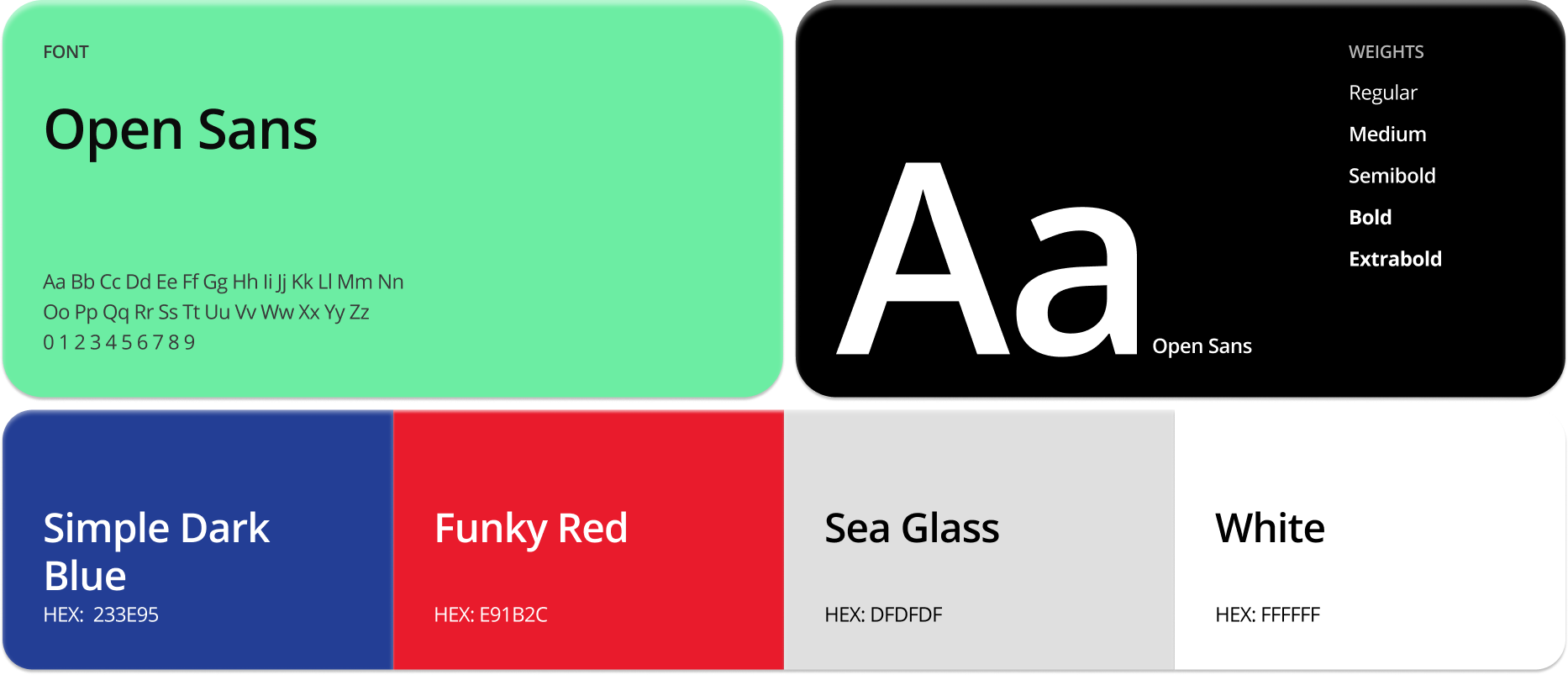
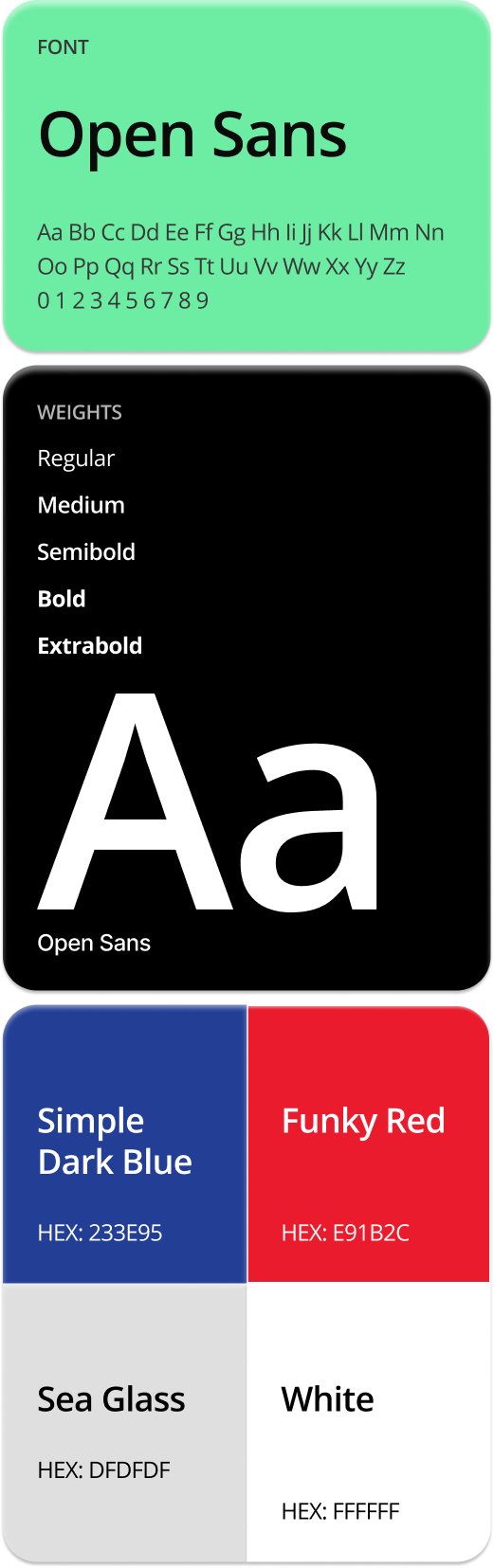
Typography & Color