EMS Lifeline: Event EMS Platform
Healthcare
Internal Tool


CLIENT
Life Line Ambulances
CATEGORY
Healthcare
TIMEFRAME
9 Weeks
SERVICE
Product Strategy
Development
About Project

- Average dispatch response down from 9 minutes to 90 seconds at large events.
- 340 events covered in the first year, up to 60,000 attendees each.
- Radio traffic reduced by an estimated 70%, with routine coordination moved to structured data.
- Crew positioning visible to organisers in real time, replacing status requests over the phone.
- Incident documentation completed on scene rather than reconstructed hours later.
- Built in 9 weeks.
Challenge & Solution

Challenge
Event medical coverage relied on manual coordination between dispatch teams and event organizers, increasing response delays and operational confusion during high attendance events.

Solution
We developed an event EMS coordination system that structures resource allocation, dispatch workflows, and team communication, improving response readiness and operational visibility during large scale events.
Event medical coverage runs on radio and mobile phones. A first aider at a festival sees someone go down, calls it in on a handheld, and a dispatcher tries to work out from a verbal description which of forty acres they are standing in and which crew is closest.
At a small event that works. At sixty thousand people across a site with limited signal and three stages running, it does not. The client had run events where a crew was dispatched to the wrong gate, and where the event organiser and the medical provider had genuinely different understandings of how many personnel were on site.
The two sides also had no shared view of anything. Organisers rang the medical lead for updates, which pulled the medical lead away from coordinating, which is precisely the wrong direction during an incident. Everyone involved knew this and nobody had a tool that fixed it.
Ninety seconds against nine minutes is the number that matters clinically, and most of it came from removing the verbal description of location rather than from anyone moving faster.
Commercially, the shared organiser view turned out to be a differentiator in tenders. The provider now wins contracts partly on the reporting they can offer a licensing authority, which was a side effect of the audit trail rather than a design goal.
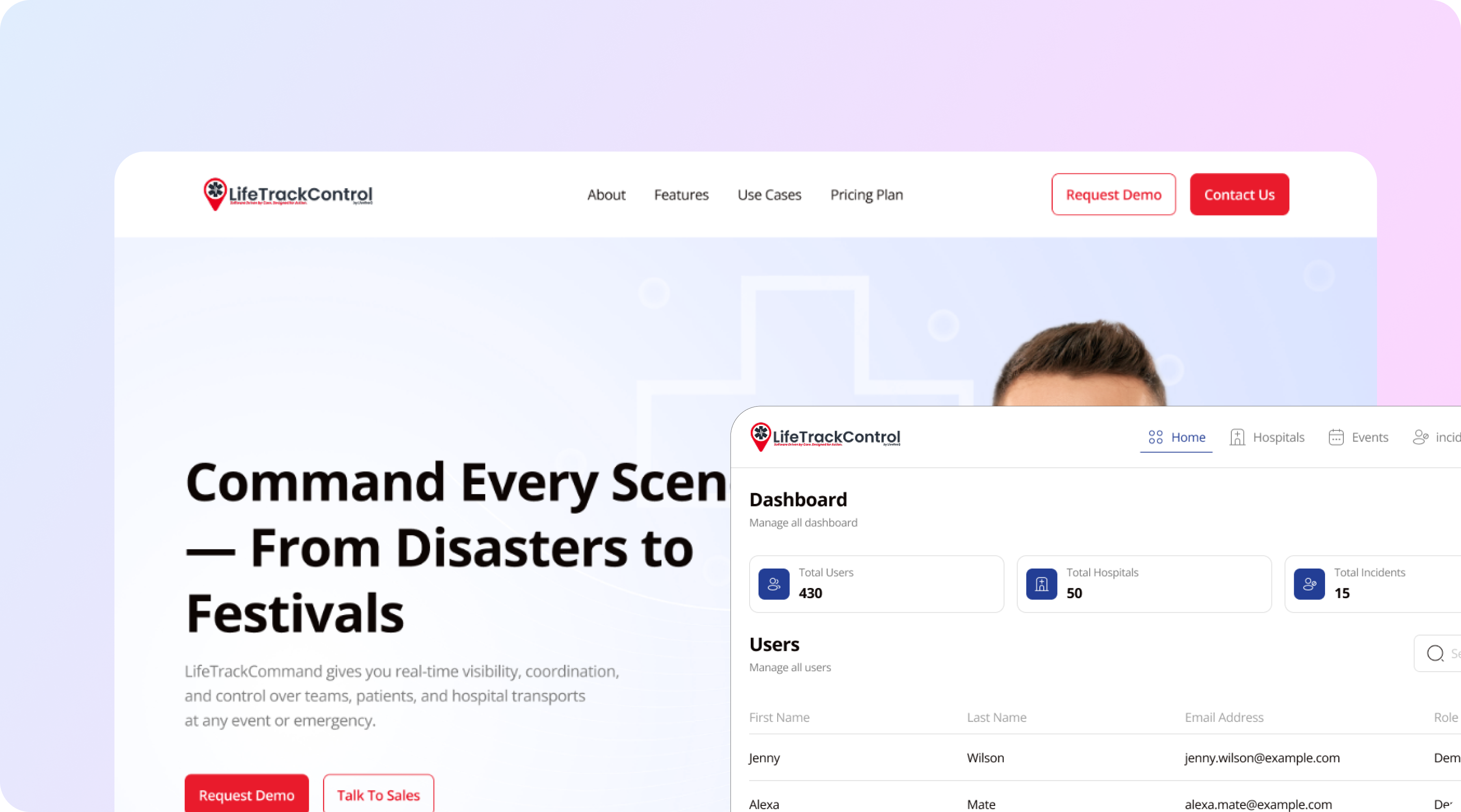
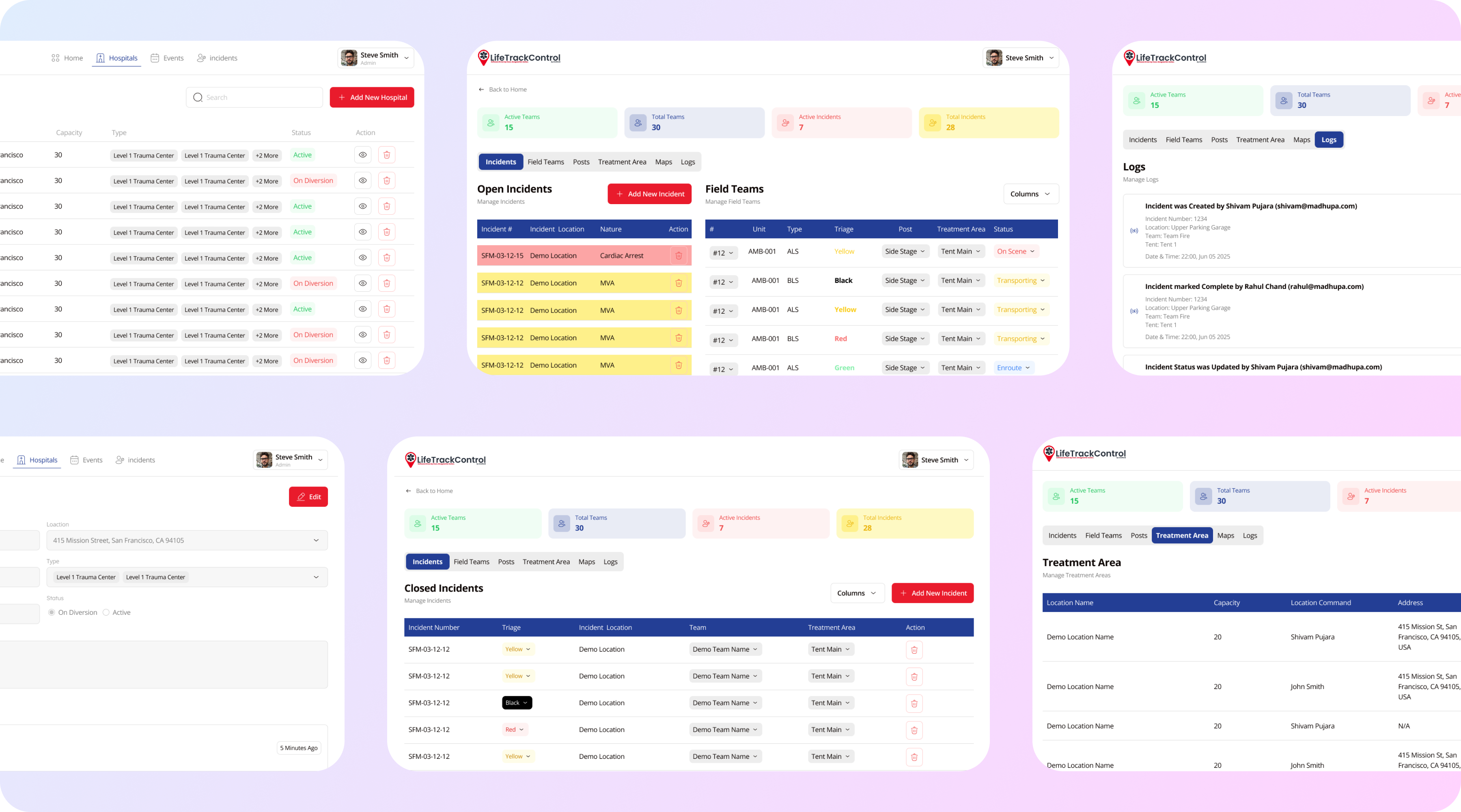
A live site map with crew positions, static posts and incident pins, built on the event's own site plan rather than a street map, because gate numbers and stage names are how people on the ground actually navigate.
Incidents are raised from a handset in a few taps with category, severity and location, and dispatch assigns to the nearest appropriate crew with skill level matched to the call.
Organisers get a read-only operational view showing coverage and open incidents, which removed the phone calls without giving them access to patient detail.
Patient records are captured on scene against the incident, including handover to an ambulance service where transport is required. Everything timestamps automatically, producing the post-event report and the audit trail that insurers and licensing authorities ask for.
The system runs offline on site with sync on reconnection.
Typography & Color